
In short
Concentration is not a character trait but the skill of holding a task despite everything happening around, and that skill can be trained. The most common causes of drifting in children aged 8–18 are tasks that are too long, a phone in sight, no breaks and too little sleep. Below are five exercises of a few minutes each and a free attention test. Exercises are not a diagnosis: where ADHD is suspected, the first step is a specialist, not a course.
Why a child cannot focus
The four most common causes — before looking for anything more serious.
- 1The task is too longThe child cannot see the end, so they give up at the start. The same task cut into three usually gets finished.
- 2A phone in sightIt does not have to ring. Simply lying nearby is enough to pull attention every few minutes.
- 3No breaksAfter a long stretch attention drops and does not come back on its own. A short break with movement works better than pushing on.
- 4Too little sleepA short-slept child looks scattered — and sometimes overactive. It is the first thing to check.
What exactly we train
Attention is not one skill but several, and each has its own exercises.
Holding the task
Staying with it to the end even when it got boring — the core of school work.
Resistance to noise
Working while something is happening nearby. In a classroom something always is.
Switching
Moving from one task to another and back without losing the thread.
Pace without errors
Rushing usually means careless mistakes. We train both sides together.
Five exercises to do at home
Short, a few minutes each. Daily beats an hour once a week.
- 1One task, one timerSet 10 minutes and agree: for that time, one task only. A break when it rings. A shorter promise that is kept beats a long one that is broken.
- 2Find the letterThe child scans a text and marks every occurrence of one letter. Simple, measurable, and progress shows day to day. 3 minutes.
- 3Counting backwardsFrom one hundred down in sevens. Trains working memory and holding the thread at once. 2 minutes.
- 4Repeat the sentenceAn adult reads a sentence, the child repeats it exactly. Sentences get gradually longer. 3 minutes.
- 5A break with movementAfter every 20–25 minutes of study: five minutes of movement, no screen. This is part of the training, not a reward.
The printable cards are being prepared by our coaches — they will appear here as a download, with no sign-up and no phone number.
How this looks in class
Attention is trained alongside memory techniques: tasks are short, with a clear end and a visible result.
- 1Class with a coach90 minutes once a week, groups of 5–10 children, online.
- 2Short tasks with a clear endThe child can see how much is left — that alone holds attention.
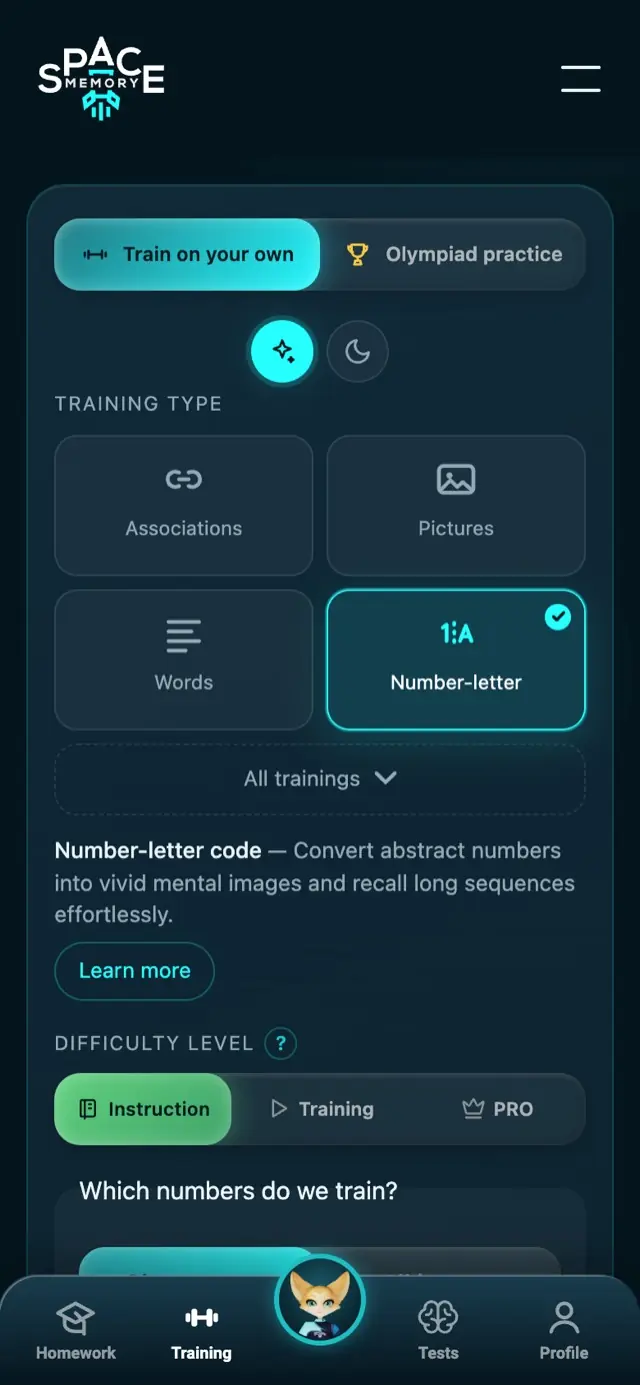
- 3Daily practiceA few minutes a day on the platform, a separate trainer for each exercise.
- 4A parent viewThe month map shows every day: done or skipped.
When it is not a training matter
Attention exercises are neither a diagnosis nor a treatment. With these signals a specialist comes first.
- 1Difficulty everywhereNot only in study, but in play, at the table, in conversation — for a long time and in different settings.
- 2Suspected ADHDA diagnosis comes from a specialist, not from a course or an online test. Our classes can support, but they do not replace assessment or therapy.
- 3A sudden changeThe child used to focus well and stopped. Find out what happened around then and talk to a psychologist.
Start with the free test
A 15-minute test shows memory, attention and processing speed — and gives parents a readable map of a child's strengths and weak spots. No sign-up, instant result.
Take the free test15 minutes · no sign-up · instant result
Who teaches
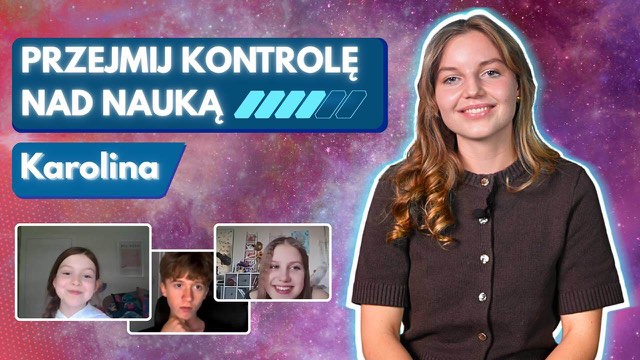
Space Memory was founded by Natalia and Karolina Lubenets — the team behind the Indigo Mental Club network of mental arithmetic schools. Coaches are selected strictly: one candidate in eight makes it.


What we can back up
Only what we can show.
The Indigo Mental Club team
Space Memory was built by the same team as the Indigo mental arithmetic school network.
An attention test on classic tasks
The free assessment uses Flanker and Go/No-Go among others — tasks used to study attention and response inhibition.
Groups of 5–10
At that size the coach sees when a child drops out of the task and reacts immediately.
What parents say
Real reviews from Space Memory families — with a name, a city and the child's age.
Questions and answers
How long should a child stay with one task?
Rather than comparing with a table, measure your own child: how many minutes they work before drifting. Then stretch that by a minute a week.
Do concentration exercises help with ADHD?
They can support, but they do not replace assessment or therapy. If you suspect ADHD, a specialist comes first.
My child focuses on games for hours but not on homework — does that mean they can focus?
A game gives instant feedback and a clear goal; homework usually does not. That is why we work with tasks that have a visible end and result.
How much time a day do the exercises take?
A few minutes. Short and daily works far better than one long session a week.
Should I take the phone away during study?
Moving it out of the room is enough. It is usually the change with the biggest effect and the hardest to introduce.
How do I check my child's attention?
With the free test on our site: 15 minutes, no sign-up, instant result. It is not a diagnosis, but it shows where to look.
Are classes online only?
Yes, all classes are online — children join from any city or country.
Start with the free attention test
Fifteen minutes with no sign-up will show whether the difficulty is attention, memory or processing speed. A manager will explain the terms for your country.