
In short
Mnemonics turn hard material into easy material: numbers and concepts become images, images link into a story, and a story has a fixed order you can walk through. There are four core techniques — image, association, chain and memory palace. We teach all four in live online classes for ages 8–18, and below you can try them straight away on ready examples.
Why cramming stops working
In the early years repeating a few times is enough. From about year four there is simply too much material for that.
- 1Too much materialSeveral subjects a day, each with its own dates and terms. Repeating until it sticks no longer fits in the day.
- 2Nothing to hold on toMemorised text has no handle. A mnemonic gives an image the memory can come back to.
- 3BoredomCramming is grim, so the child postpones studying. Turning material into images and stories is simply more interesting.
The four techniques we start with
Each has its own use — together they cover most of the school material.
Image
Turning a word, number or concept into a vivid, concrete picture. The base for everything else.
Association
Linking the new to what the child already knows — the odder and more animated, the better it sticks.
Chain
Images linked into one story: each follows from the last, so the order replays itself.
Memory palace
A familiar place with a fixed order of spots — one item per spot. For long lists and for speaking.
Ready-made mnemonics to try today
Four examples that work immediately and explain the idea better than any theory.
- 1Spelling tricksA sentence whose words carry the tricky letters in order. Let the child invent their own — a borrowed one works far worse.
- 2Colours of the rainbowOne sentence instead of seven words. Same condition: the child's own sentence, and the sillier the better.
- 3Times tablesThe hardest facts become short scenes with number images — and stop being strings of digits.
- 4A difficult foreign wordThe sound of the word becomes an image in the child's own language, then that image is linked to the meaning in one scene.
The full example set is being prepared by our coaches — it will appear here as a download, with no sign-up and no phone number.
How the classes work
A technique shown once and never practised is gone in a week — so classes and daily practice go together.
- 1Class with a coach90 minutes once a week, groups of 5–10 children, online.
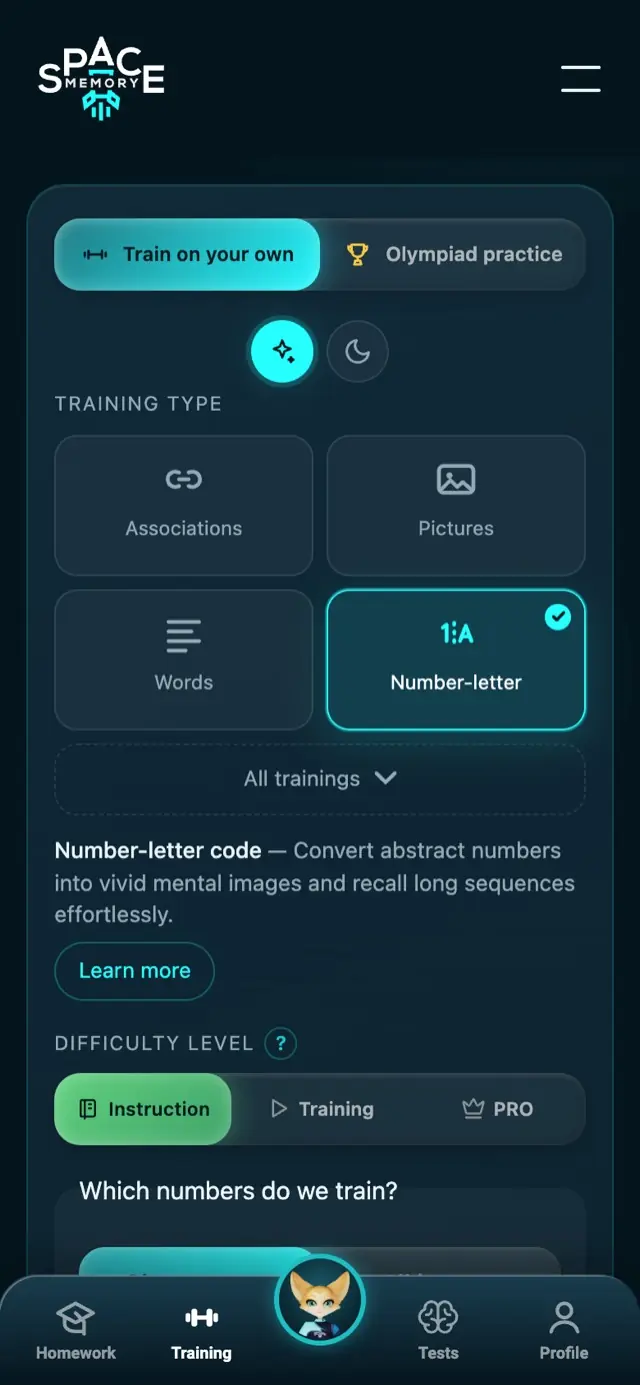
- 2A trainer per techniqueThe platform has separate practice for images, associations, chains and the memory palace.
- 3The child's own school materialChildren practise on what they are studying right now, not on textbook examples from a course.
What each level covers
Techniques are introduced in order: each one builds on the last.
- 1Level oneImage and association: words, short lists, poems.
- 2Level twoChain and numbers: dates, formulas, long enumerations.
- 3Level threeMemory palace: exam material, talks, presentations.
Start with the free test
A 15-minute test shows memory, attention and processing speed — and gives parents a readable map of a child's strengths and weak spots. No sign-up, instant result.
Take the free test15 minutes · no sign-up · instant result
Who teaches
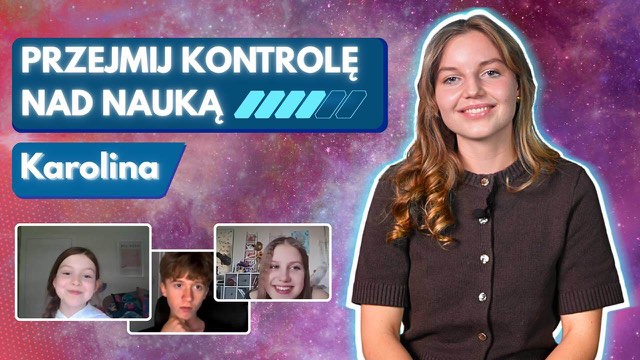
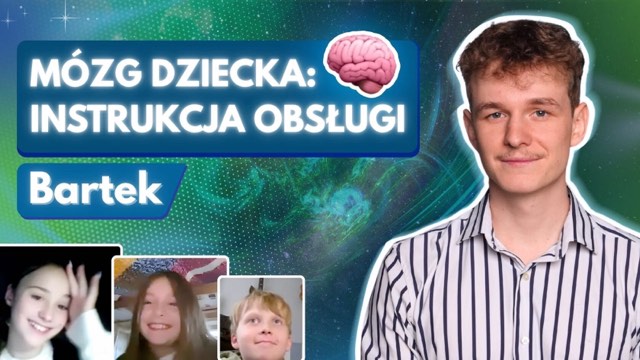
Space Memory was founded by Natalia and Karolina Lubenets — the team behind the Indigo Mental Club network of mental arithmetic schools. Coaches are selected strictly: one candidate in eight makes it.

What we can back up
Only what we can show.
The Indigo Mental Club team
Space Memory was built by the same team as the Indigo mental arithmetic school network.
Our own olympiads
We run olympiads for our students — that is where the techniques show in practice.
A certificate per level
Finish a level, get a certificate; parents follow progress on the month map.
What parents say
Real reviews from Space Memory families — with a name, a city and the child's age.
Questions and answers
How are mnemonics different from ordinary repetition?
Repetition reinforces sound; a mnemonic builds a handle — an image and a link that bring the content back. Repetitions are still needed, just fewer of them.
What age will a child understand these techniques?
From 8. Younger children do well with images and associations; the memory palace usually comes in from nine.
Does it not take longer than simply memorising?
The first few times, yes. After that turning something into an image takes seconds, and it stays far longer.
Do mnemonics work for maths?
For formulas, definitions and the order of steps, yes. They will not replace calculation itself.
Will the child mix up images once there is a lot of material?
That is exactly why we teach the memory palace: fixed locations keep the order and stop images from blurring together.
Does a child need a good imagination?
No. Imagination is a skill that grows with practice, and the first classes are largely about that.
Are ready-made mnemonics from the internet enough?
They help to start, but a child's own image sticks far better than a borrowed one.
Try it with a coach
In the first classes a child picks up image and association and practises them on their own material straight away. A manager will explain the terms.