








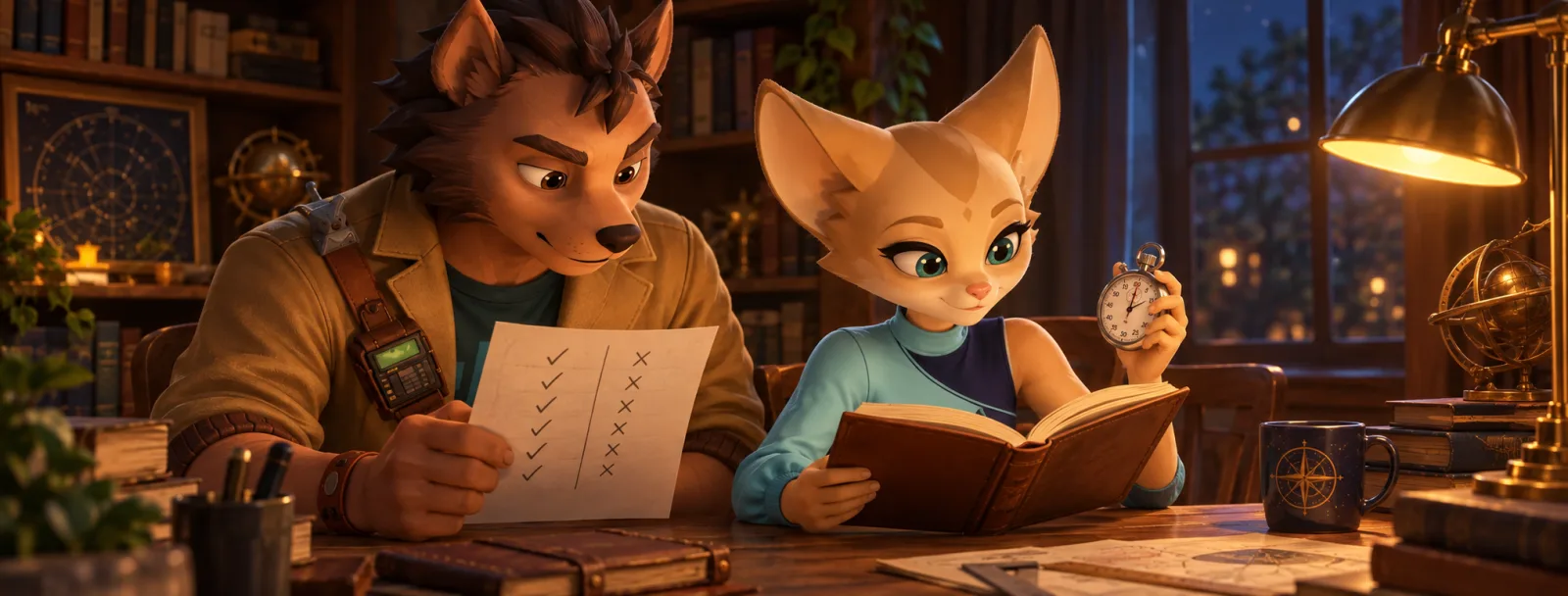
Three promises worth taking apart
All three appear in course advertising. Each has a different status.
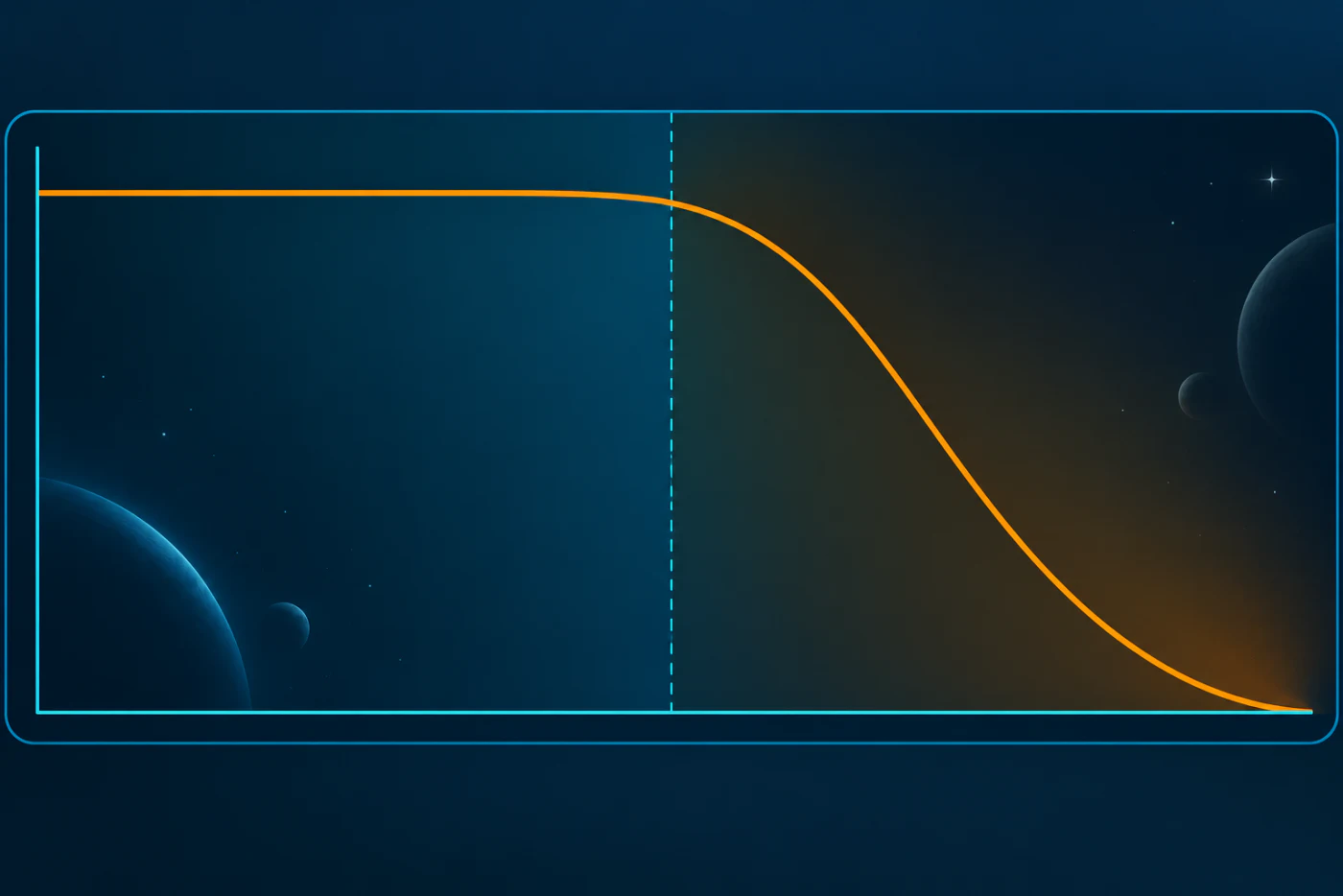
- “Several times faster with no loss of comprehension” — The biggest number in the advertising and the least supported. With a large increase in pace, reading turns into skimming: the general sense survives, the details and nuances do not.
- “Stop saying the words in your head” — Partly sensible. Quietening the inner voice can help with simple texts, but with difficult material it is precisely what holds the sense together — removing it entirely is not the goal.
- “Read whole lines at a time” — Here the limit is physical: we see sharply only a narrow stretch of a line, the rest is blurred. The span can be widened a little, but not so that it takes in a paragraph at a glance.
 SharpBlurred — only roughly recognised
How to check this on your own child
Six steps, one evening. It is the only way not to rely on somebody else's numbers — including ours.
- Choose two similar texts
The same book, two chapters of comparable difficulty and length. Comparing a fairy tale with a biology textbook tells you nothing.
- Measure the first text
A stopwatch, ordinary reading pace, the number of words per minute written down. No techniques at all — this is the baseline.
- Ask five questions
Three about facts, two about the overall sense. Write the number of correct answers beside the pace — from now on, always two numbers.
- Read the second text with a guide
A finger or a strip of paper moved under the line, without stopping and without going back. This is the only technique in the whole check.
- Five questions again
The same arrangement: three about facts, two about sense. Now you have two pairs of numbers and can compare.
- Draw your conclusion from both numbers at once
Pace up and comprehension unchanged — the technique helps. Pace up and comprehension down — that was a trade, not a gain.
If the child reads slowly because they are still sounding words out or losing their place in the line, no pace technique will help. At that stage the work is on fluency itself, and with clear difficulties it is worth having them seen by a specialist.
What a record of such a measurement looks like
Two sample records from the same evening, to show how the result is read. These are not our data and nobody's actual results — it is a template for the sheet.
A record that looks like success and is not
- Text A, ordinary reading: 110 words a minute, 4 correct answers out of 5.
- Text B, with a guide and “faster”: 190 words a minute, 2 correct answers out of 5.
- Pace up by three quarters, comprehension down by half. That is not a gain but an exchange of one for the other — exactly the one the advertising does not mention.
- The conclusion for a parent: on this text the child sped up at the cost of detail. With a novel that does not matter; with a biology textbook it costs a mark.
A record showing a real gain
- Text A, ordinary reading: 110 words a minute, 4 correct answers out of 5.
- Text B, with a guide, without hurrying: 135 words a minute, 4 correct answers out of 5.
- The increase is smaller, but comprehension did not move — that is what can genuinely be trained and held.
- The conclusion for a parent: this is worth practising further, because the improvement is not borrowed from comprehension.
The numbers above are illustrative and are there to show how a result is read, not what to expect from your child. The only numbers that mean anything to you are the ones measured in your home on your text.
Work out the pace in a minute — with no app at all
Before deciding that a child reads slowly you need a number. Here is how it is worked out, and it takes one minute.
- Count the words in three lines
In the chosen book, count the words in three full lines and divide by three. That gives the average number of words per line — usually between 8 and 12.
- One minute of reading, aloud or silently
A stopwatch set to 60 seconds, the child reads at their ordinary pace, and you mark in pencil where they stopped.
- Count the lines and multiply
The number of lines read times the average number of words per line. Those are your words per minute.
- Add the second number
Five questions about the passage: three about facts, two about the overall sense. Without that second number the first means nothing.
The outcome is a pair of numbers rather than one, and it only means anything compared with your own measurement from a month ago on a similar text. Comparing a child with tables from the internet says nothing: there is no way of knowing what the text was, what the questions were, or whether any were asked.
If the child is still sounding words out or losing their place, this measurement makes no sense — at that stage the work is on fluency, and with clear difficulties it is worth having them seen by a specialist.
 Still no cost hereA trade from hereReading pace
What the research says
The key paper on the limits of speed reading — and what follows from it for the course.
Rayner et al., 2016 — a review of research on reading and eye movements
A summary of what is known about reading: sharp vision covers only a narrow stretch of a line, so “reading whole paragraphs” is not physically possible. A large increase in pace comes at the cost of comprehension, and the biggest real speed-up comes not from eye-movement technique but from better knowledge of the language and the subject.
This is one of the two papers on our list that speak about what we do NOT promise. There is something in it for parents too: the most effective way to make a child read faster is to have them read a lot and know plenty of words — the techniques organise what is already there.
What speeding up genuinely gives
Four things with backing — and as much as can honestly be expected from them.
Fewer backward eye movements
Going back over what has been read eats time, and in a practised reader most of it is unnecessary. A guide limits it from the first day.
Reading with a question in mind
Someone who knows what they are looking for does not read everything with equal care. It is the biggest time gain on the whole list and needs no course at all.
Surveying the text beforehand
A glance at subheadings and the first sentences of paragraphs before reading organises the content. It works for textbooks, not for a novel.
Choosing the pace deliberately
Instructions, a novel and a maths problem need different speeds. The ability to slow down is part of speed reading, though nobody advertises it that way.
The most common mistakes when practising pace
Five things that spoil both the measurement and the reading itself.
Measuring pace only
One number always looks good, because it is always possible to speed up. The questions about the text are the part of the measurement that guards against fooling yourself.
Racing against a table from the internet
There is no knowing what the text was or whether questions were asked. The only sensible comparison is your own measurement from a month ago.
Practising pace on everything
A novel is read slowly and that is not wasted time. The techniques are for material that has to be got through, not for what is read for pleasure.
Banning backward glances at any cost
With a difficult sentence going back is part of understanding, not an error. A guide should limit habitual returns, not necessary ones.
Daily measurements
The result swings from day to day with tiredness and with the text. A measurement every few weeks shows the change; a daily one shows noise and puts the child off.
What to expect at which age
Our observations from class; the reference point remains the measurement on your own child.
| Year | What to expect |
|---|---|
| Years 2–4 | The aim is fluency, not pace — the numbers say little yet |
| Years 5–7 | A guide and reading with a question, with pace rising at the same comprehension |
| Years 8–9 and sixth form | Two paces to choose from, and surveying the text beforehand |
Check whether this is about reading at all
The free cognitive test shows attention and inhibition. Sometimes slow reading is a consequence of attention dropping out of the task rather than of reading technique.
Open the free testshort test, about 7 minutes · no sign-up · instant result
Why we are the ones writing this
Space Memory runs a speed-reading course, so we have an interest in making it sound better than it is. We decided that a parent who knows what to expect makes a better participant than one who came for a thousand words a minute. That is why our classes always measure two numbers, not one.
Parents' questions
How many words per minute is a good result for a child?
It depends on age and on the text, and comparing with tables from the internet leads nowhere. The sensible measure is your own reading from a month ago on the same kind of text.
Will speed reading spoil reading for pleasure?
No, as long as the child knows these are two different modes. A novel is read slowly and nobody times it — the techniques are for textbooks and material that has to be got through.
From what age does speed reading make sense?
Realistically from about year five, once reading itself is fluent. Before that the work is on fluency, not on pace.
Do apps that flash words one at a time help?
They force you not to go back, so the pace rises. Comprehension of harder texts usually drops with that kind of reading, because you cannot return to a sentence.
Does your course promise a particular result?
No. We promise a measurement at the start, measurements along the way, and that both numbers — pace and comprehension — will always be given together.
What if the child reads fast but remembers nothing?
That is a sign of reading with no question in mind and no pause at the end. A three-sentence summary after each chapter helps.
How much can realistically be gained?
In a child who reads habitually slowly but fluently, an improvement with comprehension held steady is usually visible — and that is the limit that can honestly be promised. There is no method giving a manifold speed-up without loss of detail; the review of reading research (Rayner et al., 2016) says so directly.
Is a finger guide not something for little children?
There is nothing childish about it: it is a way of limiting habitual backward eye movements, and it works the same in a teenager. You drop it once the backward movements disappear on their own.
The test, reading practice and our course.
Speed reading course for kids
Speed and comprehension measured in every lesson with a coach.
What is a cognitive test
It checks attention and processing speed — sometimes slow reading comes from there rather than from technique.
How to help a child read faster
What to do at which stage of learning to read, year by year.
Speed reading exercises for kids
Seven exercises for home, including the guide and reading with a question.
Would you like to measure this with a coach?
On the speed-reading course every lesson ends with two numbers: words per minute and answers to questions. Classes run 90 minutes once a week in groups of 5–10. Leave a request and we will tell you about the next group.
Request a callThis text is free and deliberately contains what you will not find in course advertising — including ours.